What Is Wellness? And How Can Coaching Help?

We hear the word wellness everywhere — in Instagram captions, health food labels, even corporate mission statements. But what does it actually mean? One scroll through social media and you’re met with green juices, luxury retreats, sculpted bodies, and morning routines that start at 5 a.m. If that’s wellness, it’s no wonder so many of us feel like we’re doing it wrong.
In a world where influencers and celebrities often shape the narrative, wellness can start to look like a lifestyle reserved for the privileged — curated, polished, and expensive. It becomes something we’re meant to chase, but rarely feel like we can actually reach. And when life feels messy, overwhelming, or we’re burnt out, the idea of being "well" can feel even more distant.
But what if wellness isn’t about perfection — but something far more personal and grounded? Exploring what wellness actually is, is a great place to start.
Coaching can be another great place to turn to for help — not to tell you what wellness should look like, but to help you explore what wellness means to you.
In this post, we’ll unpack the real meaning of wellness (beyond the buzzwords), and whether coaching might just be the support you didn’t know you needed.
So, What Is Wellness?
We hear the word wellness all the time — in conversations, ads, and all over social media. But what does it actually mean?
The Global Wellness Institute defines wellness as:
“The active pursuit of activities, choices and lifestyles that lead to a state of holistic health.”
Put simply, wellness is something we do, not something we have or don’t have. It’s a process — not a finish line. It’s not about ticking boxes or achieving perfection. It’s about noticing what supports you, what drains you, and making choices — big or small — that move you toward more balance and ease in your life.
In addition to wellness, you’ll often hear terms like wellbeing or holistic health. While they’re closely related to wellness, they each have a slightly different focus:
Wellbeing refers to a state — how we feel in our lives at a given moment.
Holistic health reminds us that true health isn’t just physical, and wellness isn’t either — it includes our mental, emotional, social, and spiritual wellbeing, too.
Wellness is therefore the ongoing practice of tending to all of those layers.
What matters most though, is that Wellness is deeply personal.
There’s no one-size-fits-all version. We all come to this space with different stories, needs, and resources. What feels nourishing for one person might feel overwhelming for another. Your starting point, your goals, your pace — they’re all unique. And that’s more than okay.
For some, wellness might look like carving out five quiet minutes before the day begins. For others, it might mean moving more, eating differently, or reconnecting with their body.
It might mean slowing down. Saying no. Reclaiming rest. Or finally doing something just for you.
You don’t need a perfect plan. You don’t have to do everything at once.
Wellness isn’t a checkbox or a competition. It’s a personal exploration — a chance to discover what feels good, what feels true, and what helps you feel more like yourself.
That’s why defining wellness for yourself is so powerful.
It helps you stop chasing someone else’s version of health — and start honouring your own.
“Wellness isn’t about doing more, being perfect, or following someone else’s formula. It’s about finding what’s right for you.”
In the next section, we’ll explore what are known as the domains of wellness.
As you read through each one, take a moment to reflect:
· Which areas feel strong in your life right now?
· Which ones might need a little more attention and support?
This kind of gentle self-check-in is a powerful first step in creating wellness that’s truly your own.
The Domains of Wellness
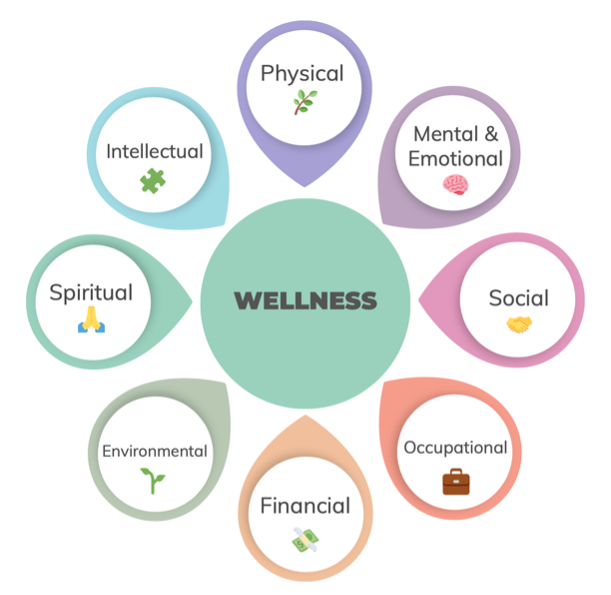
To make wellness feel more accessible, it can help to look at the different areas that influence it. These are often referred to as domains of wellness — key parts of life that, together, shape how we feel and function.
You don’t have to focus on them all at once. But understanding them can give you a clearer sense of where you are now, and where you might want to head next.
🌿Physical Wellness
Caring for your body through movement, nutrition, sleep, and rest. It’s about feeling strong, energised, and supported — not about reaching a certain size or fitness level.
🧠 Mental & Emotional Wellness
How you handle stress, emotions, and your inner dialogue. This includes self-awareness, resilience, and finding healthy ways to cope with life’s ups and downs.
🤝 Social Wellness
The quality of your relationships and sense of connection. Do you feel supported? Do your relationships feel mutual and nourishing?
💼 Occupational Wellness
Feeling a sense of purpose and satisfaction in your work — whether that’s a job, career, caregiving role, or something else that fills your days.
💸 Financial Wellness
Your relationship with money — including how secure, in control, or at ease you feel with your financial situation.
🌱 Environmental Wellness
Feeling safe and at ease in your physical surroundings — whether that’s your home, community, or access to nature.
🙏 Spiritual Wellness
Your sense of meaning, purpose, and connection to something greater than yourself — whatever that means to you. This can be faith-based, nature-based, or simply values-based.
🧩 Intellectual Wellness
Challenging your mind and staying curious. This might look like learning something new, engaging in creative activities, or simply enjoying new ideas.
Each domain of wellness plays a role in your overall sense of health and balance. Some areas might feel strong right now, while others may need a little more care or attention — and that’s completely normal.
What matters is recognising where you are now, and where you’d like to grow.
The key isn’t to “fix” everything at once, but to get curious. What small step could move you toward more balance, more energy, or a greater sense of ease?
This is where coaching can help. Not to tell you what to do — but to support you in exploring what wellness truly looks like in your life, and how to take steps that feel right for you.
How can wellness coaching help?
Wellness coaching is more than just goal-setting or having someone cheer you on — it’s a guided, evidence-based process that helps you make meaningful, lasting change in your life.
At the heart of coaching is a belief that you are the expert in your own life. A coach’s role is to support you in discovering what matters most to you, and help you build a path that feels aligned with your values, strengths, and circumstances.
Coaching draws on proven approaches like:
Motivational Interviewing – a respectful, client-led style of conversation that helps you uncover your own motivation for change, even if you’re feeling stuck or unsure.
Positive Psychology – the science of human flourishing, focusing on your strengths, values, and what’s working well — instead of just what's going wrong.
Behaviour Change Science – understanding how habits are formed (and unformed), and how to create small, sustainable steps that add up over time.

In practical terms, coaching can help you:
Clarify your goals and what’s truly important to you
Build awareness of your habits and patterns
Develop a plan that’s realistic and achievable
Stay motivated, even when things get hard
Work through self-doubt or overwhelm with compassion
Celebrate progress — not perfection
Coaching creates a space that’s just for you — where you can pause, reflect, and refocus. It’s not about pushing harder, but about supporting you to move forward in a way that feels right for your life.
If something here has resonated with you — if you’re wanting more balance, clarity, or simply space to pause and check in — wellness coaching might be a good fit for you.
I offer a calm, supportive, non-judgmental space to explore what matters to you, and help you take steps that feel achievable and aligned with your life.
If you're curious about working together, I’d love to hear from you. You’re welcome to reach out, ask a question, or book a free discovery call.